Movement
Trainer-Approved Moves That Keep the Back Strong

Health Points
- Four weekly strength sessions protect spinal muscles and joints.
- Proper form reduces back-pain risk more than heavy loads.
- Progressive resistance builds lasting functional strength for daily activities.
Back strength supports everything from lifting groceries to maintaining posture at a desk. A certified personal trainer outlines five exercises that target the muscles along the spine without complicated equipment.
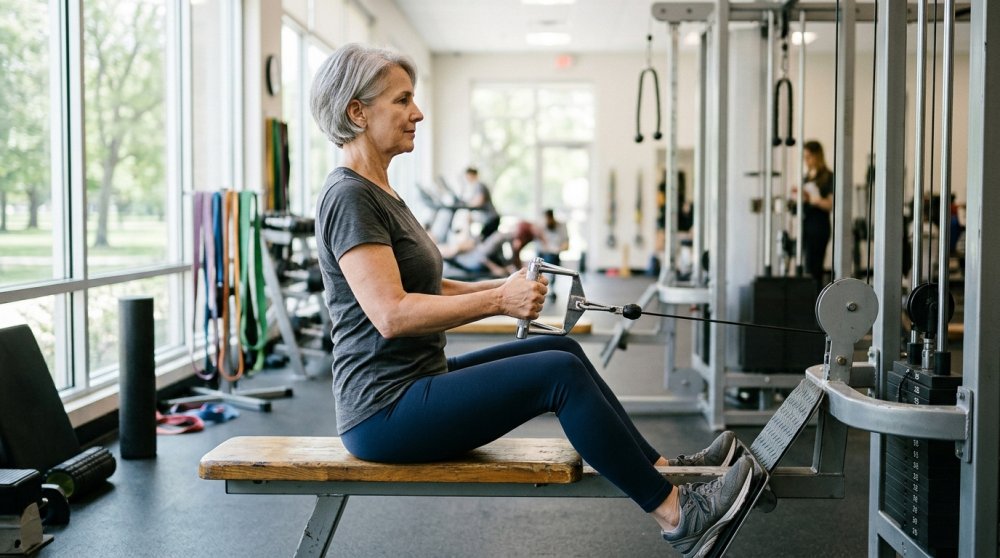
Start with the seated row. Sit tall, pull the handles toward the lower ribs, and squeeze the shoulder blades together at the end of each rep. Controlled movement matters more than speed.
“Slow and steady wins when it comes to back safety,” the trainer explains.
Next comes the single-arm dumbbell row performed from a supported stance. One knee and one hand rest on a bench while the opposite arm draws the weight upward. This unilateral approach corrects imbalances between sides.
“Everyone has a dominant side, so balanced training keeps the spine aligned,” the trainer notes.
Face pulls using a resistance band or cable finish the upper-back work. The band is pulled directly toward the eyes with elbows high, strengthening the rear shoulders and rotator cuff muscles that stabilize the shoulder blades.
Dead-bug drills on the floor train the deep core that supports the lower back. Lying on the back, opposite arm and leg reach away while the lower spine stays pressed into the mat. The exercise teaches coordination and stability together.
“Core endurance protects the lumbar region during real-life movements,” the trainer says.
Finally, glute bridges reinforce the posterior chain. Lying on the back with knees bent, the hips lift until the body forms a straight line from knees to shoulders. Strong glutes reduce stress on the lower-back muscles during walking and standing.
Perform each move two to three times per week, starting with two sets of ten to twelve repetitions. Increase resistance only after form feels consistent. Rest days allow muscles to recover and adapt, keeping the program sustainable for the long term.
