Nutrition
Simple Wrist Movements That Ease Everyday Discomfort

Health Points
- Targeted wrist exercises performed daily can help maintain flexibility and strength.
- Proper hand positioning during routine tasks reduces strain on tendons and joints.
- Early attention to mild discomfort often prevents more serious issues from developing.
Most adults notice occasional wrist stiffness after long hours at a keyboard or while carrying groceries. Gentle movement patterns introduced at the first sign of tightness can keep small problems from turning into chronic limitations.
Physical therapists often begin with a simple sequence that requires no equipment. Starting with the palms together in a prayer position, slowly lowering the hands until a light stretch is felt along the inner forearms provides an effective warm-up. Repeating the motion five to eight times helps circulation without forcing the joint beyond comfortable range.
“Many people wait until pain interrupts sleep before they seek guidance,” notes occupational therapist Dr. Laura Simmons. “Daily two-minute routines started earlier tend to preserve function far longer.”
Ergonomic adjustments at workstations matter just as much as exercise. Keeping the keyboard at elbow height and the monitor slightly below eye level allows the wrists to remain in a neutral position. Adding a soft wrist rest offers support during pauses rather than during active typing.
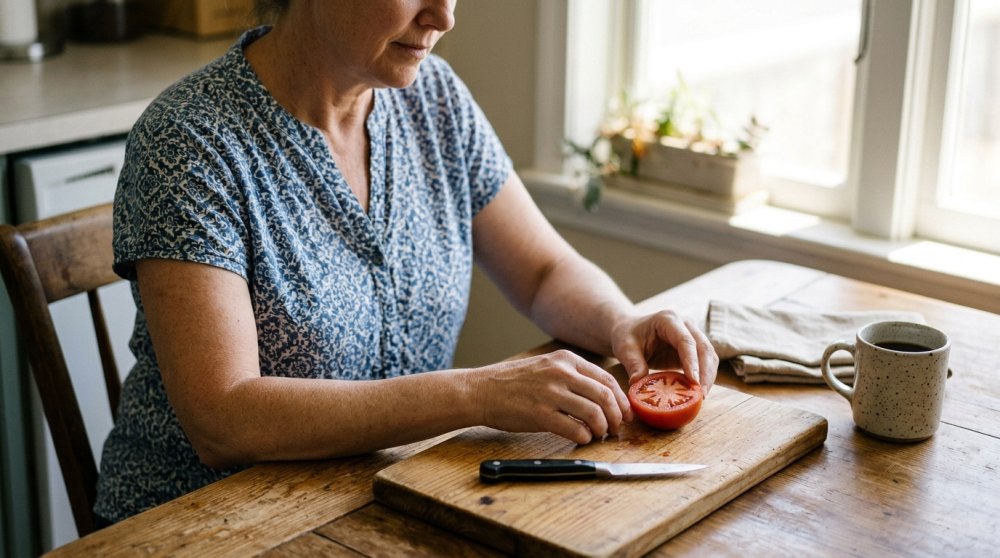
Household tasks such as chopping vegetables or lifting a heavy pot place the wrists in extension. Rotating the cutting board so the elbow stays tucked and using both hands to share the load can lessen repetitive stress.
“The goal is not to eliminate every ache,” explains orthopedic surgeon Dr. Michael Reyes, “but to keep the joint moving within its natural design so tissues stay supple.”
Heat packs applied for ten minutes before gentle stretches increase blood flow, while cold packs after repetitive activity help calm inflammation. Alternating between the two approaches often brings quicker relief than either method alone.
Persistent swelling, numbness that travels into the fingers, or weakness when gripping objects warrants professional evaluation. Early assessment allows conservative measures such as splinting or guided therapy to be introduced before surgical options need consideration.
