Nutrition
Whole Beets Deliver Steady Blood-Pressure Benefits Without the Sugar Spike

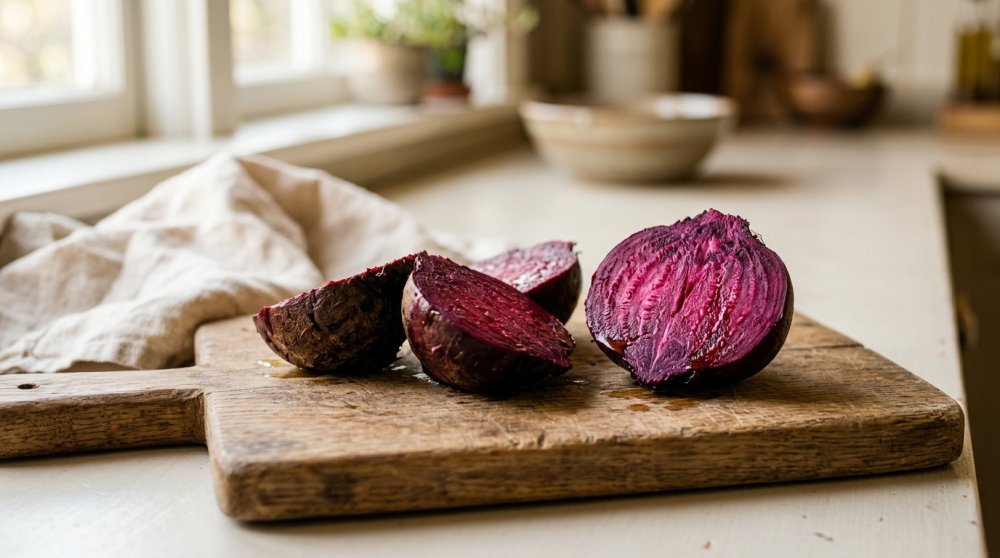
Health Points
- Whole beets provide fiber and slower-release nitrates that help maintain steady blood-pressure support.
- Beet juice delivers concentrated nitrates but lacks the fiber that aids overall heart health.
- Both forms contain betalains, plant compounds linked to reduced inflammation and improved circulation.
Whole beets and beet juice both supply nitrates that the body converts into nitric oxide, a molecule that relaxes blood vessels and supports healthy blood flow. Choosing the right form depends on your health goals and daily routine.
Registered dietitian Sarah Johnson notes the advantage of eating the vegetable itself.
“Whole beets give you fiber along with the nitrates, so you stay fuller longer and your blood sugar stays steadier.”
Juicing removes most of that fiber, concentrating the nitrates into a fast-acting shot. For adults monitoring hypertension, this can produce a quicker dip in readings, yet the effect may fade sooner without the sustained release fiber provides.
Nutrition researcher Dr. Michael Torres explains the trade-off.
“If convenience is key and you tolerate the natural sugars, a four-ounce glass of beet juice can fit easily into a morning routine.”
Those who prefer minimal prep can roast or steam beets ahead of time and store them for several days. A simple salad of chilled beets, a drizzle of olive oil, and a pinch of sea salt offers the same heart-supporting compounds found in juice with the added benefit of satisfying crunch.
People managing diabetes or watching carbohydrate intake often find the whole vegetable easier on blood-glucose levels. The fiber slows absorption, preventing the brief rise in sugar that sometimes accompanies the sweeter juice.
