Nutrition
Air Purifiers Linked to Better Blood Pressure and Deeper Rest

Health Points
- Using an air purifier overnight may lower blood pressure
- Indoor air quality improvements are linked to better sleep
- Filters that reduce particulates support cardiovascular health
Many adults over forty notice that restful sleep becomes harder to achieve. A small but growing body of evidence suggests that the air we breathe while sleeping plays a meaningful role.
Researchers who tracked participants for several weeks found that running a quiet, HEPA-grade purifier during sleep correlated with modest drops in nighttime blood pressure readings. The same group reported fewer awakenings and deeper sleep stages on nights when the device operated.
“Cleaner indoor air appears to ease the cardiovascular load that occurs during rest,” one investigator noted.
Filters that capture fine particles and allergens are thought to reduce subtle inflammation in the airways. Less irritation can translate into steadier heart rhythms and fewer micro-arousals that fragment sleep.
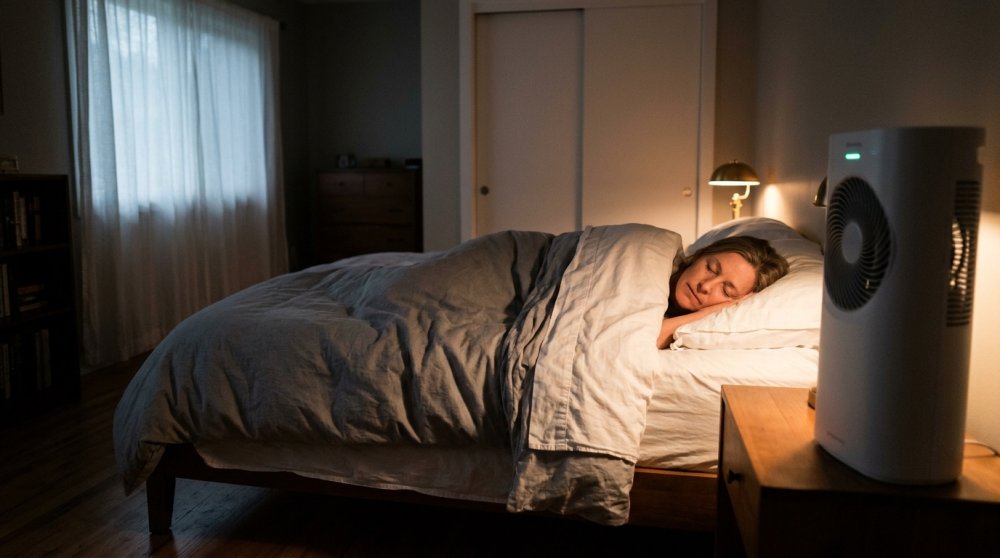
Evening routines matter too. Placing the unit a few feet from the bed and keeping the fan on its lowest setting limits noise while maintaining airflow.
“We saw the clearest benefits when people kept windows closed and ran the purifier continuously,” a study coordinator explained.
Traditional habits such as opening bedroom windows for fresh air can still be helpful on low-pollen days. On most nights, however, sealing the room and filtering recirculated air provides more consistent protection from outdoor pollutants that drift indoors.
Long-term cardiovascular wellness often rests on these small, repeated choices. A bedside purifier that runs quietly through the night is one simple step many families are adding to their evening routines.
