Nutrition
The Vitamin C Powerhouses Hiding in Your Kitchen

Health Points
- Six everyday foods deliver more immune-boosting vitamin C than kiwi fruit, including surprising options like red bell peppers and Brussels sprouts
- Adults need 75-90 mg of vitamin C daily, an essential nutrient the body cannot produce or store on its own
- Eating a varied diet of colorful fruits and vegetables ensures optimal vitamin C intake without relying on supplements
When most Americans think about vitamin C, oranges and citrus fruits typically come to mind. Yet nutritionists point to several common foods that pack an even more powerful punch of this essential nutrient — and many are already sitting in your refrigerator.
Vitamin C plays a crucial role in supporting immune function, promoting healthy skin, and helping the body absorb iron from plant-based foods. The body cannot produce or store this water-soluble vitamin, making daily intake through diet essential for maintaining optimal health, especially as we age.
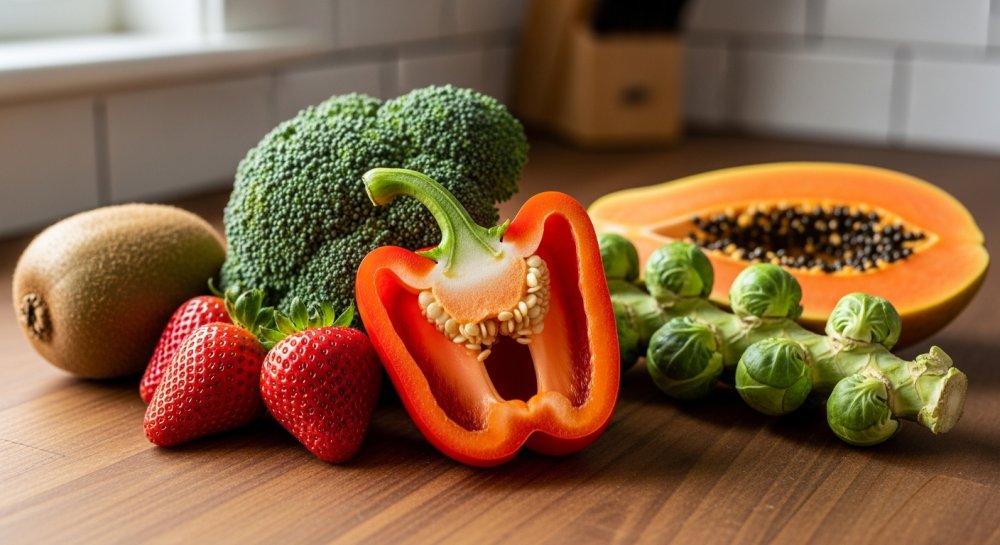
A single kiwi fruit contains approximately 64 milligrams of vitamin C, already providing a significant portion of the daily recommended intake. However, registered dietitians identify six foods that surpass even this impressive amount, offering adults over 40 smart choices for meeting their nutritional needs.
Red Bell Peppers Lead the Pack
One medium red bell pepper delivers a remarkable 152 milligrams of vitamin C — more than double the amount found in a kiwi. These vibrant vegetables become sweeter as they ripen, making them an appealing addition to salads, stir-fries, or simply enjoyed raw with hummus.
The high vitamin C content in red peppers also aids collagen production, supporting skin elasticity and joint health — particularly important considerations for those concerned with healthy aging.
Broccoli and Brussels Sprouts Offer Year-Round Options
Cooked broccoli provides approximately 101 milligrams of vitamin C per cup, while Brussels sprouts deliver 97 milligrams in the same serving size. Both cruciferous vegetables remain available throughout most of the year and pair well with traditional American meal preparations.
These vegetables also contain fiber and other beneficial compounds that support digestive health and may help reduce inflammation, aligning with conservative approaches to wellness that emphasize whole foods over pharmaceutical interventions.
Strawberries Bring Sweetness and Nutrition
One cup of fresh strawberries contains about 89 milligrams of vitamin C, making them an excellent choice for breakfast or dessert. Unlike processed sweets, strawberries provide natural sugars along with fiber, helping maintain stable blood sugar levels.
Fresh strawberries peak during spring and early summer months, but frozen options retain most of their nutritional value, offering families convenient access to this vitamin C powerhouse year-round.
Papaya Provides Tropical Nutrition
A single cup of fresh papaya cubes delivers approximately 88 milligrams of vitamin C, nearly matching strawberries while offering a different flavor profile. This tropical fruit also contains papain, an enzyme that aids digestion.
Papaya has become increasingly available in mainstream American grocery stores, making it easier for families to incorporate variety into their fruit consumption without relying on specialty markets.
Orange Juice Lives Up to Its Reputation
While whole oranges contain about 70 milligrams of vitamin C, a cup of fresh-squeezed orange juice provides approximately 124 milligrams. Health experts recommend choosing 100% juice without added sugars and limiting portion sizes to avoid excess calorie intake.
Pairing orange juice with iron-rich foods like spinach or lean beef enhances iron absorption, demonstrating how traditional food combinations often align with nutritional science.
Building a Vitamin C-Rich Diet
Rather than focusing on single foods or expensive supplements, nutrition experts emphasize the importance of eating a varied diet rich in colorful fruits and vegetables. This approach aligns with time-tested dietary wisdom that prioritizes whole foods over processed alternatives.
Adult men need approximately 90 milligrams of vitamin C daily, while women require about 75 milligrams. Smokers need an additional 35 milligrams daily due to increased oxidative stress.
Most Americans can easily meet these requirements through diet alone by incorporating two to three servings of vitamin C-rich fruits and vegetables into their daily meals. This conservative approach to nutrition emphasizes personal responsibility and informed food choices over reliance on supplements or medical interventions.
By focusing on nutrient-dense whole foods available at local grocery stores, families can support their health naturally while enjoying meals that align with traditional American eating patterns and values of self-sufficiency.
