Nutrition
The Hidden Health Difference Between Juicing and Blending Your Fruits

Health Points
- Blending retains fiber that slows sugar absorption and supports digestive health, while juicing removes most of this beneficial fiber
- Juice concentrates natural sugars without fiber to buffer them, potentially causing rapid blood sugar spikes similar to sugary beverages
- Both methods can fit into a healthy lifestyle, but whole fruits and blended smoothies offer more complete nutrition than extracted juice alone
For health-conscious adults looking to boost their fruit and vegetable intake, the choice between juicing and blending has become more than a kitchen preference. It’s a decision that can significantly impact how your body processes nutrients, manages blood sugar, and maintains digestive health.
While both methods offer convenient ways to consume produce, nutritionists emphasize that the processes create fundamentally different end products. The key distinction lies in what happens to the fiber, a component that plays a crucial role in how our bodies handle natural sugars and absorb nutrients.
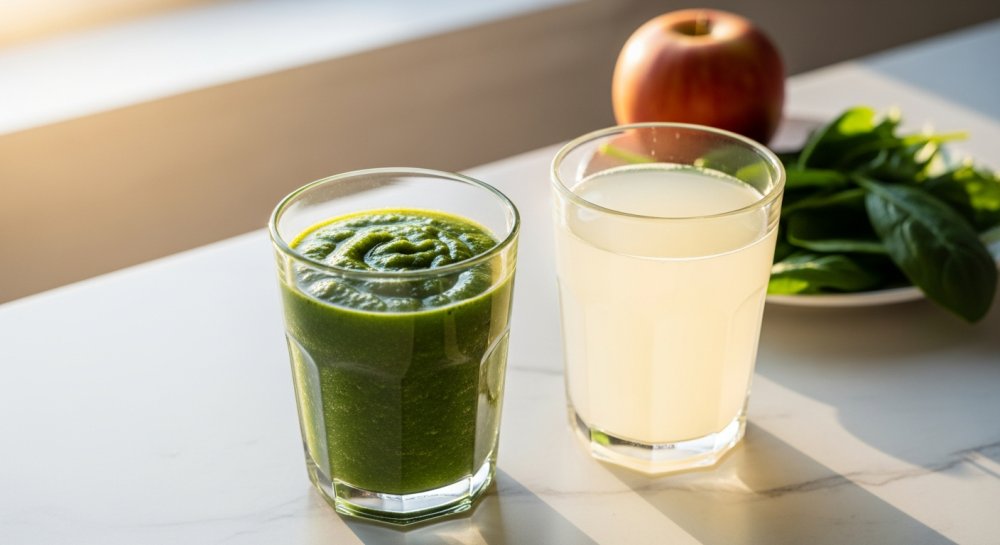
Blending incorporates the entire fruit or vegetable into your drink, grinding it into a thick, pulpy consistency that retains all the original fiber. Juicing, by contrast, extracts only the liquid, leaving behind the fibrous pulp and creating a smooth, concentrated beverage.
This difference matters more than many realize. Fiber acts as nature’s regulator, slowing the absorption of sugar into the bloodstream and helping maintain steady energy levels throughout the day. Without it, even natural fruit sugars can trigger the same rapid blood sugar spikes associated with less healthy sweet drinks.
Nutrition experts point out that fiber also contributes to feelings of fullness, supports regular digestion, and feeds beneficial gut bacteria. A blended smoothie containing a whole apple provides all these benefits, while juice from the same apple delivers concentrated sweetness without the balancing effect of fiber.
The calorie consideration also tilts in blending’s favor. Because juicing requires multiple pieces of fruit to produce a single glass, the calorie and sugar content can add up quickly without the satiety that fiber provides. A freshly pressed orange juice might contain the equivalent of four oranges—far more than most people would eat in one sitting—while a blended smoothie using one whole orange with other ingredients creates a more filling, balanced drink.
Despite these advantages for blending, juicing isn’t without merit. For individuals with certain digestive conditions or those recovering from illness, the easier-to-digest nature of juice can be beneficial. Fresh vegetable juices, particularly those emphasizing greens over fruits, can deliver concentrated nutrients without excessive sugar.
Health professionals recommend that those who choose juicing should focus on vegetables rather than fruits as the primary ingredient. Adding a small amount of fruit for palatability keeps sugar content reasonable while maximizing nutrient density. Leafy greens, cucumbers, celery, and herbs create flavorful combinations without the sugar load of fruit-heavy juices.
For optimal health benefits, nutritionists suggest treating juice as a supplement rather than a meal replacement. The concentration of nutrients without accompanying fiber means juice doesn’t provide the sustained energy and satisfaction needed to replace solid food. Pairing a small serving of fresh juice with a balanced meal that includes protein, healthy fats, and complex carbohydrates creates a more nutritionally complete approach.
Timing also matters when consuming juice. Having it alongside a meal that contains fiber, protein, and fat helps moderate blood sugar response better than drinking it alone on an empty stomach. This strategy allows you to enjoy the nutrient benefits while minimizing potential blood sugar disruption.
For those committed to blending, nutritionists advise including protein sources like Greek yogurt, nut butter, or protein powder, along with healthy fats from avocado or seeds. These additions transform a fruit smoothie into a more balanced option that can serve as a satisfying meal or substantial snack.
The bottom line remains straightforward: neither juicing nor blending can fully replace eating whole fruits and vegetables, which provide the complete package of fiber, nutrients, and natural structure that supports optimal health. Both methods can complement a balanced diet, but understanding their differences helps you make choices aligned with your health goals.
For adults over 40 particularly concerned about blood sugar management, digestive health, and sustained energy, blending generally offers more advantages. The preserved fiber supports metabolic health and provides the fullness factor that helps with weight management—concerns that become increasingly important with age.
Whether you choose a morning smoothie or an occasional fresh-pressed juice, the key is viewing these beverages as part of a varied diet rich in whole foods. The healthiest approach combines the convenience and nutrition of blended or juiced produce with plenty of whole fruits, vegetables, lean proteins, and whole grains throughout the day.
