Nutrition
The Volume-Eating Strategy That Helps You Feel Satisfied on Fewer Calories

Health Points
- High-volume, low-calorie foods help you feel fuller longer while maintaining a healthy calorie balance
- Foods with high water and fiber content provide more satiety per calorie than calorie-dense options
- Strategic food choices can support weight management without leaving you hungry between meals
As we age, maintaining a healthy weight becomes both more important and more challenging. But the solution isn’t about eating less—it’s about eating smarter.
Nutrition experts are increasingly recommending what they call “volume eating,” an approach that focuses on foods that take up more space in your stomach while delivering fewer calories. The secret lies in choosing foods with high water and fiber content, which create a feeling of fullness without the caloric load.
The Science Behind Feeling Full
When you eat foods with greater volume, your stomach stretches, sending signals to your brain that you’ve had enough to eat. This natural satiety mechanism helps prevent overeating without requiring constant willpower. Water-rich vegetables, fruits, and broth-based soups accomplish this beautifully.
Fiber plays an equally important role. It slows digestion, stabilizes blood sugar levels, and keeps you feeling satisfied for hours after a meal. For Americans over 40, who often struggle with metabolism changes, this strategy offers a practical path forward.
Twelve Smart Choices for Your Plate
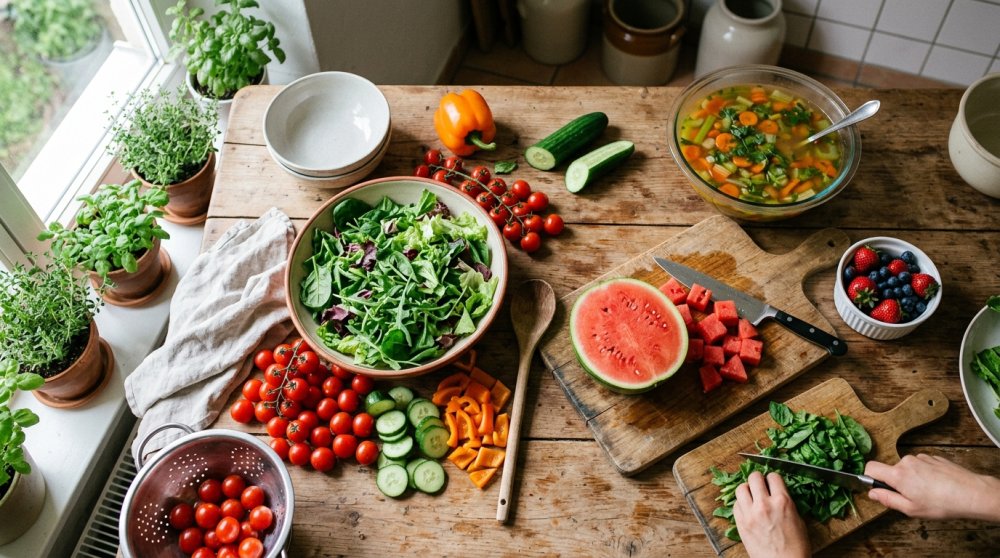
Leafy greens like spinach, kale, and romaine lettuce top the list. A full cup of raw spinach contains just seven calories, yet provides volume, vitamins, and minerals. You can fill half your plate with greens and barely make a dent in your daily calorie budget.
Cruciferous vegetables—broccoli, cauliflower, and Brussels sprouts—offer substantial volume with minimal calories. A cup of chopped broccoli contains only 31 calories while delivering fiber, vitamin C, and cancer-fighting compounds.
Berries stand out among fruits for their exceptional fiber-to-calorie ratio. Strawberries, blueberries, and raspberries satisfy sweet cravings while providing antioxidants that support healthy aging. A full cup of strawberries contains just 46 calories.
Watermelon and other melons derive their name from their high water content, making them perfect for volume eating. Two cups of diced watermelon provide sweetness and hydration for only 80 calories.
Cucumber and celery are nearly calorie-free vegetables that add satisfying crunch to meals and snacks. Their high water content also contributes to daily hydration needs, which become increasingly important as we age.
Tomatoes, whether fresh or cooked, offer versatility along with volume. Cherry tomatoes make excellent snacks, while larger varieties work well in salads and cooked dishes. They’re rich in lycopene, a compound linked to heart health.
Zucchini and other summer squashes can be spiralized into noodle alternatives or sliced into substantial portions that bulk up any meal. One medium zucchini contains approximately 33 calories.
Bell peppers provide crunch, color, and vitamin C while taking up considerable plate space. One medium pepper contains only about 25 calories and can be enjoyed raw or cooked.
Mushrooms offer a meaty texture that makes them satisfying despite their low calorie count. They also provide B vitamins and selenium, supporting energy levels and immune function.
Broth-based soups deserve special mention as research consistently shows that people who start meals with soup consume fewer total calories. The liquid volume triggers satiety signals before you’ve consumed many calories.
Plain popcorn, when air-popped without excessive butter or oil, provides impressive volume for relatively few calories. Three cups of air-popped popcorn contain only about 93 calories while delivering whole grain benefits.
Finally, Greek yogurt (plain, unsweetened varieties) offers protein along with volume, making it particularly valuable for maintaining muscle mass—a concern for adults over 40.
Making Volume Eating Work in Real Life
The key to success with this approach is preparation. Having pre-cut vegetables ready in the refrigerator removes barriers to healthy choices. Starting lunch and dinner with a large salad or broth-based soup naturally reduces the portions you’ll want of higher-calorie foods.
This strategy also aligns with traditional American values of common sense and self-reliance in health matters. Rather than depending on expensive supplements or restrictive diet plans, volume eating empowers individuals to make straightforward food choices that support wellbeing.
For those managing chronic conditions or taking medications, these whole foods provide nutrients without interfering with treatment plans. The approach doesn’t require special products or complicated meal plans—just a shift in how you fill your plate.
Beyond Weight Management
While volume eating supports healthy weight maintenance, the benefits extend further. The vitamins, minerals, and phytonutrients in these foods support immune function, reduce inflammation, and may lower risk for chronic diseases that become more common with age.
The fiber content supports digestive health and helps maintain stable blood sugar levels throughout the day, reducing energy crashes and unhealthy snacking.
Most Americans don’t consume enough vegetables and fruits, falling short of recommended daily servings. Volume eating naturally corrects this deficit, bringing eating patterns more in line with what our bodies need to thrive.
As healthcare costs continue rising and preventive health becomes increasingly important, simple dietary strategies that anyone can implement at home deserve attention. Volume eating requires no special equipment, no subscription services, and no radical lifestyle changes—just thoughtful choices about which foods deserve the most space on your plate.
